
Diet + Exercise: The Metabolic Combo
How eating and physical activity impact your cellular health
We hear so much about the benefits of different diets, but does it ever feel like there's too much information? Here's the evidence-based breakdown of what actually works.
Hi there!
I'm Gina. If you're reading this, it's likely because you're motivated to improve your health, shake up your habits, or simply become the best version of yourself. The great news is that you've already taken the most important step: seeking professional medical information rather than falling for "influencer" trends or social media coaches. By choosing to read this, you're already on the right track—so, congratulations!
We hear so much about the benefits of different diets, but does it ever feel like there's too much information? Sometimes it just becomes background noise, and it's hard to walk away with a clear message. Don't worry—as a doctor, I've felt that way too! That's why I created this blog: to give you precise, evidence-based information that is actually easy to understand. Let's dive in.
Popular Diets and Their Real Benefits
Mediterranean Diet: Anti-Inflammatory

Scientifically speaking, the Mediterranean Diet is a dietary pattern defined by a high intake of monounsaturated fats (primarily from olive oil) and a very low intake of saturated fats.
It is built on these core pillars:
-
The Foundation: A high and dominant consumption of plant-based foods—fruits, vegetables, legumes, nuts, seeds, and whole grains. Olive oil is the star of the show as the primary culinary fat.
-
In Moderation: Fish and seafood (your main animal protein), dairy (mostly fermented options like greek yogurt, kefir, and cheese), and poultry.
-
The Minimum: Red meat, processed meats, and refined sugars or sweets.
From a nutritional perspective, this pattern guarantees:
-
An excellent ratio of monounsaturated to saturated fatty acids.
-
A high intake of dietary fiber.
-
A powerful dose of antioxidants and polyphenols (from extra virgin olive oil, wine, fruits, and vegetables).
-
Low caloric density compared to food volume (meaning you can eat a lot of food without eating too many calories, thanks to all those veggies!).
Why it works:
-
Fights Systemic Inflammation: Conditions like obesity, insulin resistance, and Type II Diabetes are deeply linked to chronic inflammation. This is caused by an overproduction of "cytokines"—proteins produced by our immune system. - In cases of obesity, excess adipose (fat) tissue releases cytokines like Tumor Necrosis Factor-alpha (TNF-α). When too much TNF-α is released, the body develops insulin resistance. - This diet also lowers other inflammatory markers like Interleukins 6 and 17 (IL-6 and IL-17). You can actually have these measured in a lab to see your progress before and after making lifestyle changes!
-
Boosts Insulin Sensitivity: By lowering the inflammatory markers mentioned above, your body becomes more efficient at using insulin, which is a game-changer for anyone with pre-diabetes or Type II Diabetes.
-
Optimizes Cholesterol: It helps raise "good" HDL cholesterol and lower "bad" LDL (though plant-based diets are even more potent for this, as we'll see later).
-
A Natural Anti-Inflammatory: Extra Virgin Olive Oil contains a compound called Oleocanthal, which inhibits the same enzymes as ibuprofen (the COX enzyme) but naturally and without side effects.
This is for you if: You are dealing with conditions related to systemic inflammation that are not autoimmune (like general metabolic issues).
Keto Diet: Fast-Track Results on the Scale
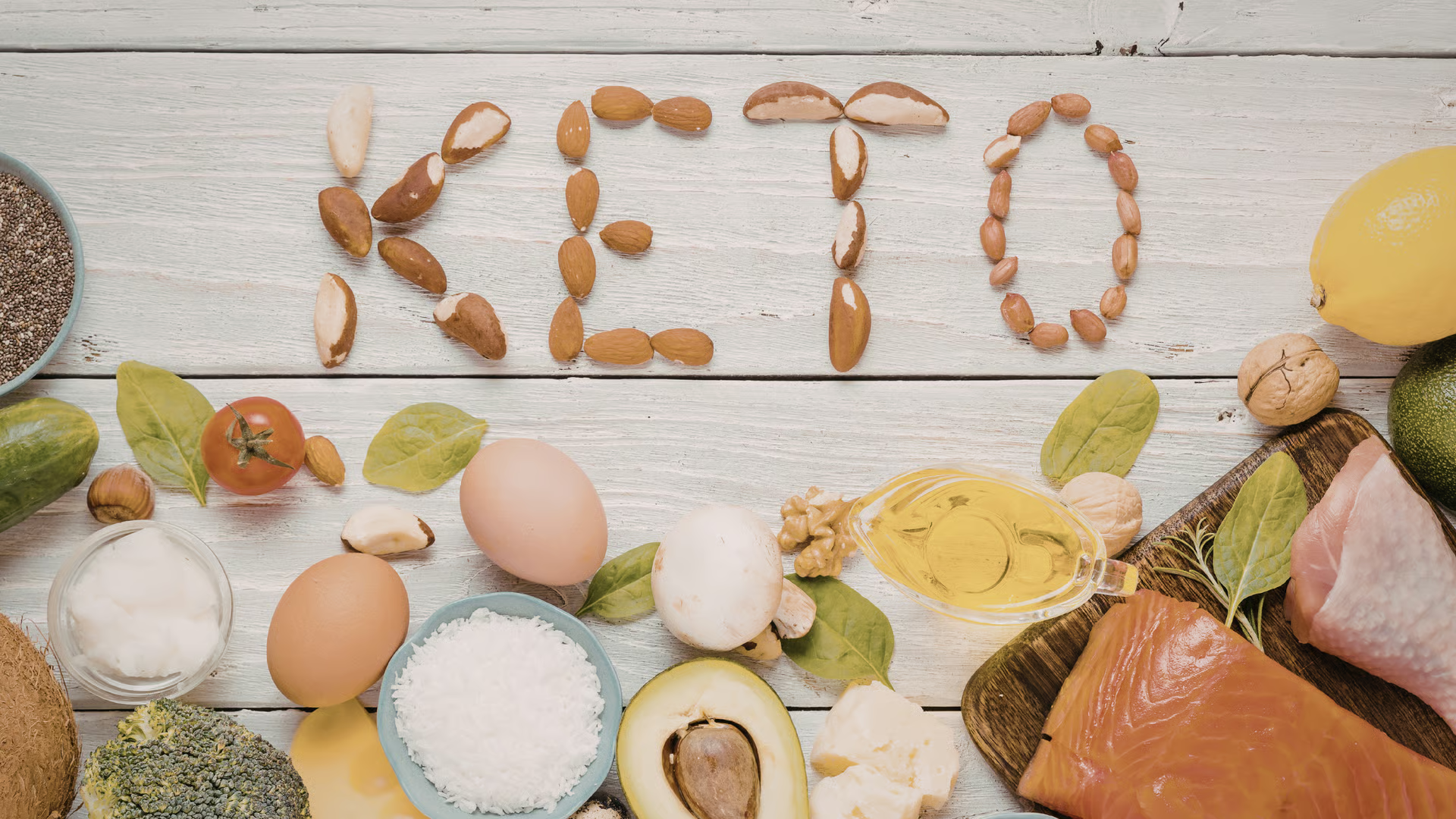
The ketogenic (Keto) diet is a high-fat, low-carb regimen designed to put your body into a state of ketosis, making it a very effective tool for weight loss.
Ketosis is a natural metabolic state where your body switches from burning glucose (sugar) to burning fats (lipids) for fuel. When glucose is low, the liver breaks down fat into molecules called ketone bodies (acetoacetate, beta-hydroxybutyrate, and acetone), which power your brain and organs.
A 2025 study from the University Clinic of Padua in Italy followed obese patients with Psoriatic Arthritis (an autoimmune musculoskeletal disease) over a 9-week Keto regimen. The results were impressive:
-
Significant Weight Loss: Many patients saw their BMI drop, with some losing over 10% of their total body weight.
-
Better Lipid Profile: There was a major reduction in triglycerides, total cholesterol, and LDL levels.
-
The Power of BHB: Beta-hydroxybutyrate (BHB) is a ketone body that does more than provide energy; it actually blocks a protein called NLRP3, which is a main driver of inflammation in diseases like Diabetes type II, Alzheimer's, and Gout.
Therefore, it is only natural to think that a Keto Diet could help people suffering from these chronic conditions. What are your thoughts?
Plant-Based Diet: A Metabolic Power House
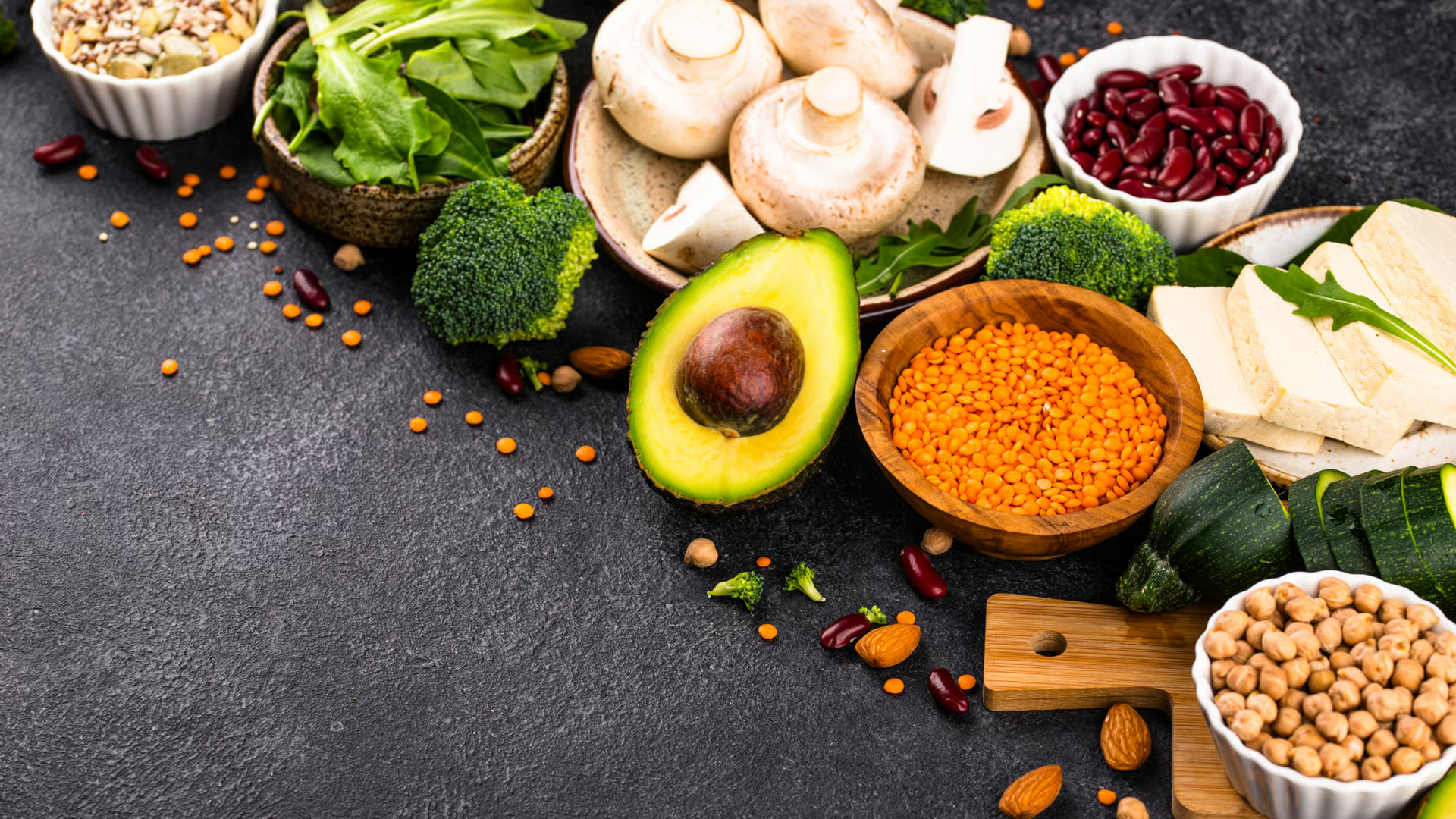
A "Plant-Based" diet doesn't mean you only eat plants; it means your diet focuses on whole, minimally processed plant foods like veggies, fruits, legumes, nuts, and grains. You can still include small amounts of animal products, or go fully vegan.
Now that we clarified what Plant-Based means, let's jump into its benefits:
-
Insulin Sensitivity: Being high in fiber, this diet slows the rate at which our intestines absorb glucose, preventing glucose spikes. This stability reduces insulin resistance.
-
Improves Metabolic Dysfunction: Plant-derived polyphenols and phytochemicals (found in berries, green tea, and dark leafy greens) have anti-inflammatory and antioxidant effects that protect against oxidative stress and chronic inflammation—two main drivers of metabolic dysfunction.
-
Cardiovascular Health: Unsaturated fats from nuts, seeds, and olive oil help reduce LDL cholesterol and triglycerides, while fiber-rich foods like legumes and whole grains support healthy lipid metabolism by promoting cholesterol excretion. This Lipid metabolism is superior when compared with a Mediterranean Diet.
-
Weight Control: The high fiber and water content promotes satiety and appetite regulation. Fiber also plays a role in hunger hormones, stimulating the release of PYY and GLP-1 (satiety hormones), allowing people to consume fewer calories without restrictive dieting.
You don't have to pick just one! My personal preference is a mix of the best of all three. The golden rule for any successful diet is simple: NO processed foods and NO overeating.
Exercise: The Game Changer
No diet can reach its full potential without movement. If you're thinking, "I don't have time" or "Everything hurts," that's just your brain trying to stay in its comfort zone. You can change that narrative. I did it myself.
Here's a breakdown of how different workouts help you at a cellular level:
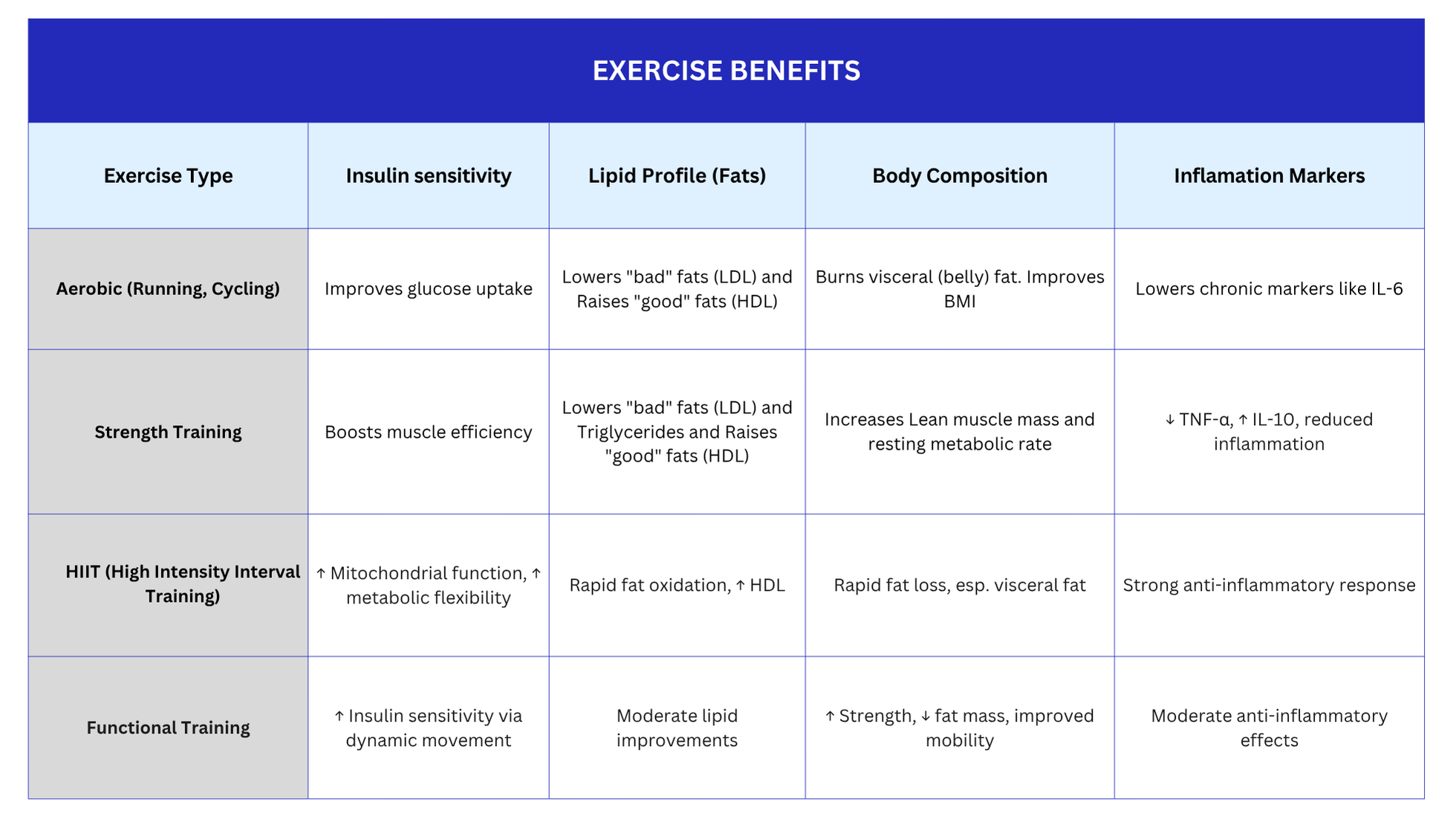
As you already figured it out from this table, exercise really helps within a cellular level.
How Much Exercise Do You Really Need?
1. The "Metabolic Snack" (The Minimum)
-
Time: 20 seconds to 4 minutes of vigorous effort.
-
The Benefit: Just 3 or 4 one-minute "bursts" (like sprinting up stairs) throughout the day can reduce mortality risk by 40%. It "resets" your insulin sensitivity for 24 hours.
2. The Acute "Reset"
-
Time: 10–15 minutes of moderate-to-vigorous activity.
-
The Benefit: 15 minutes a day can add up to 3 years to your life expectancy!
3. The "Sweet Spot" for Long-Term Change
-
Time: 150 min/week (moderate) or 75 min/week (vigorous).
-
The Benefit: This builds "mitochondrial density". Essentially making your body a more efficient fat-burning machine 24/7, even while you sleep.
Even if you don't workout, I am begging you to start at least with short periods; it could literally add years to your lifespan.
Now that you see exactly how much power you have over your own biology, what's stopping you? I hope this helps you "flip the switch" and start your Health Redesign today.
Don't forget to subscribe to my newsletter!
Dr. Gina Estupinan.
Want to receive a tailored work-out plan or diet? Contact me through our contact page.

References
- 1.Keshani, M. et al. (2025). Mediterranean Diet Reduces Inflammation in Adults. Nutrition Reviews.
- 2.Newman, J. C. (2016). β-Hydroxybutyrate: a signaling metabolite. Annual Review of Nutrition.
- 3.Ramonda, R. et al. (2025). Ketogenic diet improves disease activity in psoriatic arthritis. PLoS ONE.
- 4.Stavitz, J. et al. (2025). The Role of Plant-Based Nutrition and Exercise in Metabolic Syndrome. Nutrients.
- 5.Trichopoulou, A. et al. (2003). Adherence to a Mediterranean Diet and Survival. NEJM.
- 6.Wen, C. P. et al. (2011). Minimum amount of physical activity for reduced mortality. The Lancet.
- 7.Youm, Y.-H. et al. (2015). β-hydroxybutyrate blocks NLRP3 inflammasome. Nature Medicine.